
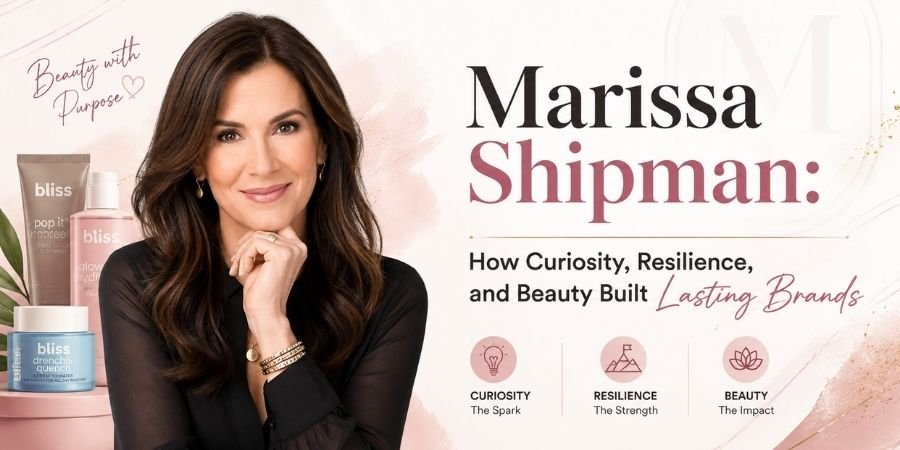
Marissa Shipman is an American beauty entrepreneur best known as the founder and CEO of theBalm Cosmetics, a beauty company that grew from a small kitchen experiment into an internationally recognized cosmetics brand. Her story stands out because she did not begin with traditional cosmetics-industry experience. Instead, she entered the business by learning, experimenting, and taking action despite not having all the answers.
Before entering beauty, Shipman worked in television production and later moved from New York to San Francisco. When she struggled to find an opportunity within the cosmetics industry, she decided to create one herself. She purchased books about making cosmetics and began experimenting at home. A simple lip-balm formula using ingredients including beeswax, shea butter, and castor oil became an early foundation for what would eventually become theBalm.
What makes Marissa Shipman particularly interesting to entrepreneurs is the way she approached uncertainty. Rather than waiting until she had industry connections, extensive experience, or a perfect business plan, she started small and learned through experimentation. Her journey demonstrates that entrepreneurial expertise can sometimes develop through doing rather than simply through formal preparation.
That approach also reflects an important principle for modern founders: a business idea does not need to begin at full scale. Shipman’s early experience shows how testing an idea, listening to customers, and improving a product can create a path toward sustainable growth.
Marissa Shipman and the Beginning of theBalm Cosmetics
The story of Marissa Shipman and theBalm began with curiosity. After deciding that she wanted to work in beauty, she taught herself about cosmetic formulation and began developing products in her kitchen. Early products such as Plump Your Pucker helped introduce the brand to retailers, while exposure through stores and beauty media helped increase its visibility.
One of the most important early milestones came through Sephora. According to Shipman’s Entreprenista interview, her first meeting with the retailer started through a personal connection that helped her secure an opportunity to present the product. The initial placement expanded over time, giving theBalm a much larger retail presence and helping establish the company as a serious beauty brand.
The lesson here is bigger than the success of one cosmetics company. Marissa Shipman demonstrated the importance of turning an introduction into an opportunity. A meeting alone does not build a company; the product, presentation, customer response, and ability to execute determine what happens next.
Her early path also highlights the value of persistence. When traditional routes into the beauty industry did not work, she created her own route. For aspiring founders, that is a useful reminder that rejection can sometimes force entrepreneurs to discover a more independent and creative path.
How Marissa Shipman Built a Resilient Beauty Business
Learning Through Mistakes
A defining part of Marissa Shipman‘s leadership philosophy is her attitude toward mistakes. In her Entreprenista conversation, she explained that mistakes can become useful when entrepreneurs learn from them and adjust their direction. That mindset helped influence how she approached later business decisions, including the development of Pretty Smart Cosmetics.
This perspective is particularly relevant in the beauty industry, where consumer preferences, retail strategies, product expectations, and marketing channels can change quickly. Instead of treating every unsuccessful decision as a final failure, Shipman’s approach emphasizes analyzing what happened and using the experience to make a better decision.
Building Beyond the Product
Another important chapter in Marissa Shipman‘s career involved investing in manufacturing capabilities. In her interview, she discussed the decision to build her own factory and the advantages that greater control over production could provide. This reflects a broader entrepreneurial lesson: as a company grows, founders may need to rethink the infrastructure supporting the original idea.
For a beauty entrepreneur, manufacturing control can influence product quality, flexibility, timing, and costs. Shipman’s willingness to make a significant operational investment shows that sustainable growth often requires more than marketing a popular product. It requires building systems capable of supporting the business as demand increases.
Marissa Shipman and Pretty Smart Cosmetics
Marissa Shipman later expanded her entrepreneurial work through Pretty Smart Cosmetics, a brand developed around the idea of offering high-quality beauty products at accessible prices. According to Entreprenista, the brand launched through Walmart in 2,800 stores, representing a major retail opportunity.
The strategy reflects a clear understanding of the changing beauty market. Consumers increasingly want quality without automatically associating premium results with extremely high prices. Shipman has described her goal as providing strong formulas at lower prices, making luxury-inspired beauty more accessible to a broader audience.
For Marissa Shipman, accessibility is therefore not simply a pricing decision. It is part of the brand proposition. By working with a large retailer such as Walmart, Pretty Smart could reach consumers who may not shop primarily through traditional prestige beauty channels.
This also illustrates how experienced entrepreneurs can apply lessons from an established company to a new venture. Rather than simply repeating theBalm’s model, Shipman used her accumulated knowledge to approach product development, pricing, manufacturing, and retail distribution from a different perspective.
What Entrepreneurs Can Learn From Marissa Shipman
The career of Marissa Shipman offers several practical lessons for entrepreneurs, particularly those entering competitive consumer industries.
- Start before everything is perfect.
Shipman’s early cosmetics experiments show the value of learning by doing rather than waiting for complete certainty. - Use rejection as information.
When traditional employment opportunities did not open the door to beauty, she created her own business opportunity. - Listen to customers.
Customer feedback can reveal what is working, what needs improvement, and where a brand can grow. Entreprenista specifically identifies customer feedback as an important theme in Shipman’s entrepreneurial journey. - Build systems as you grow.
A successful product can create operational challenges. Shipman’s decision to invest in manufacturing demonstrates the importance of developing infrastructure alongside demand. - Keep adapting.
Markets change, and successful founders need to adjust their strategies without abandoning their larger purpose.
These lessons help explain why Marissa Shipman remains an interesting example of modern entrepreneurship. Her story is not simply about creating makeup. It is about developing the ability to learn, respond, and continue moving forward when circumstances change.
Why Marissa Shipman’s Story Matters Today
The beauty industry has become increasingly competitive, with independent founders, celebrity brands, social-first businesses, established companies, and major retailers all competing for consumer attention. In this environment, having a good product is only one part of building a durable brand.
Marissa Shipman offers an example of how a founder can combine creativity with business discipline. Her journey from home experimentation to established beauty businesses demonstrates the value of understanding customers while remaining willing to change the way a company operates.
Her experience also reflects a broader trend in entrepreneurship: founders are increasingly expected to understand multiple parts of their businesses, including product development, manufacturing, branding, customer relationships, pricing, and distribution. Shipman’s career illustrates how those capabilities can evolve over time through experience.