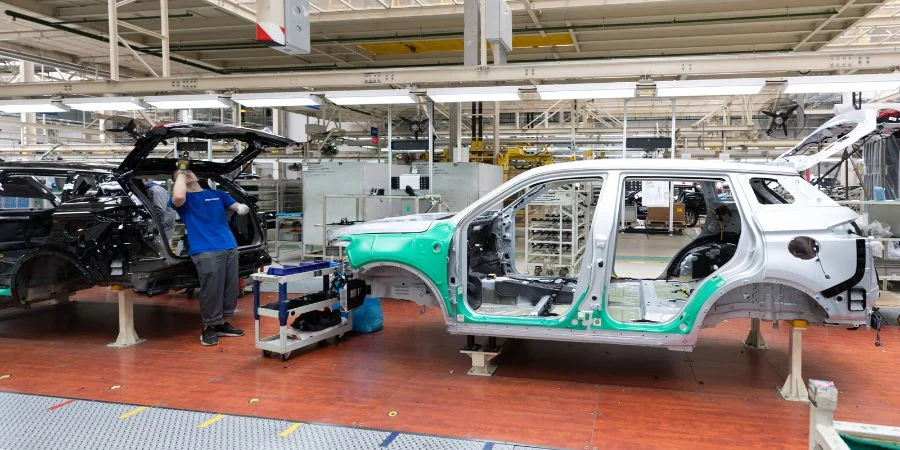
Automobiles of the 1920s were the first cars built, priced and sold for ordinary households rather than wealthy hobbyists. In the United States, registered vehicles grew from roughly 9 million in 1920 to more than 26 million by 1929. That jump came from cheaper factory production, easier engines, safer brakes, enclosed bodies and a new idea: that a car could be financed, restyled every year and matched to a buyer’s income.
This guide explains what changed, who drove the changes and why they still matter. It covers 1920s automobile technology, 1920s car manufacturing and the business decisions that shaped the automobile industry in the 1920s.
People who want to know how cars in the 1920s differed from earlier machines will find that the technology improved and that the whole way of selling and owning a car changed with it.
Key points at a glance
- Mass production cut the cost of a car and widened the consumer automobile market.
- The electric starter and better engines made driving easier for more people.
- General Motors turned the car into a product of choice, credit and style.
- Four-wheel hydraulic brakes and closed bodies improved safety and comfort.
Vehicles that defined the decade
| Vehicle | Maker | Year | Why it mattered |
| Ford Model T | Ford | 1908 (peak in the 1920s) | Showed what the moving assembly line could do to price |
| Duesenberg Model A | Duesenberg | 1921 | First production car with four-wheel hydraulic brakes |
| Essex Coach | Hudson | 1922 | Brought the closed body close to open-car pricing |
| Chrysler Six | Chrysler | 1924 | Offered hydraulic brakes at a much lower price |
| Chevrolet | General Motors | 1920s | Entry point of the GM price ladder; outsold Ford in 1927 |
| Ford Model A | Ford | Late 1927 | Replaced the Model T after 15 million cars |
1. Mass Production: Cheaper Cars Through Repeatable Systems
Mass production is a manufacturing method in which standardised parts move past workers who each repeat one task. Ford introduced the moving assembly line at Highland Park in 1913, and the 1920s were the decade in which the method spread across the industry.
The Ford Model T, introduced in 1908, shows the effect clearly. The Library of Congress records that assembly time fell from about 12.5 hours to around 93 minutes. Ford passed part of that saving to buyers. The price dropped to roughly $260 by 1924, down from $850 at launch. In 1921, Ford held more than half of the American market.
The assembly line was only the visible part. The harder achievement was a repeatable system that tied together component supply, factory scheduling, labour management and dealer distribution. Rivals who copied only the conveyor belt gained little. Those who copied the whole system, including supplier discipline, gained a great deal.
Key points
- Moving assembly line: the car came to the worker, so each person repeated a single task.
- Time saved: assembly fell from about 12.5 hours to about 93 minutes.
- Price effect: the Model T fell from $850 (1908) to roughly $260 (1924).
- Hidden factor: supplier discipline and distribution mattered as much as the conveyor.
2. Engine Technology: The Car Becomes Easier to Operate
Engine technology in this period refers to improvements in carburetion, ignition, throttling and power-to-weight ratio that made the petrol engine reliable enough for daily use. The Smithsonian’s National Museum of American History credits these refinements with the dominance of petrol power over steam and electric cars.
The electric starter mattered more than most people expect. Charles Kettering developed it for Cadillac in 1912, and by the 1920s it had spread widely. Before that, drivers used a hand crank, and a backfire could break an arm. A commonly told account links the starter to a fatal crank injury suffered by a friend of Cadillac’s Henry Leland. Whatever the exact story, the starter removed a physical barrier, and many new drivers, including women and older buyers, could now operate a car without strength or risk.
Fuel was a second engineering problem. Engine knock limited how much power engines could produce. In 1923, General Motors researchers introduced leaded petrol containing tetraethyl lead to reduce knock. It solved the performance problem, but it created a public health problem that took until the 1970s and later to address through phase-outs. In my view, this is the clearest example from the decade of a technical success whose long-term costs were underestimated. It is a fair reminder that the history of automobile technology includes mistakes as well as milestones.
Key points
- Electric starter: replaced the hand crank and opened driving to more people.
- Electric lighting: made night driving safer and more practical.
- Leaded petrol (1923): reduced engine knock but caused lasting health harm.
- Source of progress: petrol engines beat steam and electric rivals on practicality.
| Vehicle or maker | Technology link |
| Cadillac | First car maker to adopt Kettering’s electric starter (1912) |
| General Motors research team | Introduced leaded petrol in 1923 |
| Ford Model T | Later versions adopted the electric starter, ending the crank for most buyers |
3. General Motors: Selling Choice, Credit and Change
General Motors’ strategy in the 1920s was to offer a model for every price level, finance the purchase and refresh the styling regularly. Alfred P. Sloan Jr. set out this approach in the early 1920s with the idea of “a car for every purse and purpose.”
Chevrolet, Oldsmobile, Oakland (later Pontiac), Buick and Cadillac formed a ladder. A buyer could start with Chevrolet and move up as income grew, without leaving the company. The General Motors Acceptance Corporation, founded in 1919, offered instalment credit, which turned a car from a purchase requiring savings into one requiring a monthly payment. The Smithsonian identifies credit buying, affordable luxury and annual model changes as the defining parts of GM’s approach.
This changed what a car was. Ford sold transport. General Motors sold transport plus identity, and the second product proved more profitable once basic transport became cheap. The consumer automobile market began to behave more like fashion retail than machinery supply, and this automotive business strategy became the template for the industry.
Key points
- Price ladder: one company, many price levels.
- Credit: GMAC made monthly payments normal.
- Annual model changes: styling became a reason to replace a working car.
- Result: buyers purchased status and comfort, not only transport.
| GM brand | Position on the price ladder |
| Chevrolet | Entry level, competed directly with Ford |
| Oldsmobile | Lower-middle |
| Oakland (later Pontiac) | Middle |
| Buick | Upper-middle |
| Cadillac | Luxury |
4. Hydraulic Brakes: Stopping Power Catches Up with Speed
Four-wheel hydraulic braking uses fluid pressure to apply the brakes at all wheels at once, instead of relying on rods and cables. Among 1920s car innovations, it was one of the most important for safety. The Duesenberg Model A, introduced in 1921 and engineered by Frederick S. Duesenberg, was the first production car to use it.
Mechanical brakes stretched, wore unevenly and pulled the car to one side. Hydraulic systems applied force more evenly. The American Society of Mechanical Engineers named the Duesenberg system a Historic Mechanical Engineering Landmark in 2025 and notes that shorter braking distances became more important as speeds rose.
Adoption was uneven, which is a useful detail. Chrysler offered four-wheel hydraulic brakes on its first car in 1924, bringing the technology to a much lower price. Ford, by contrast, kept mechanical brakes until 1939. A better technology does not spread at the speed of its invention. Cost, supplier readiness and company habit all slow it down.
Key points
- How it works: fluid pressure reaches all four wheels together.
- Benefit: more even, more consistent stopping than cables and rods.
- Why it mattered: faster engines needed better automotive engineering at the wheels.
- Spread: premium makers first, then lower-priced cars.
| Vehicle | Braking system | Note |
| Duesenberg Model A (1921) | Four-wheel hydraulic | First production car with the system |
| Chrysler Six (1924) | Four-wheel hydraulic | Brought the technology to a lower price |
| Ford Model T | Mechanical | Ford kept mechanical brakes until 1939 |
5. Vehicle Design: From Open Tourers to Enclosed Comfort
Closed-body design means a fixed roof and windows that protect passengers from weather, as opposed to the canvas-top touring cars common before 1920. Estimates often cited by historians put closed cars at roughly 10 percent of American production in 1919, rising to more than 80 percent by the end of the 1920s.
The Essex Coach of 1922 is a good case study. Hudson priced its closed Essex close to the price of an open car, which proved that an enclosed body no longer had to be a luxury. Other makers followed. A closed car could be used in winter, in rain and for commuting, so the car shifted from weekend amusement to year-round tool.
Annual model changes at General Motors then made appearance a reason to replace a working car. This vehicle design evolution is where, in my assessment, the modern car buyer was born: someone who weighs comfort, colour and status alongside mechanical soundness.
Key points
- Closed bodies: from about 10 percent of output (1919) to more than 80 percent (late 1920s).
- Price breakthrough: the Essex Coach made enclosed comfort affordable.
- Use changed: cars became year-round transport.
- Style as a sales tool: annual updates pushed buyers to upgrade.
| Vehicle | Design significance |
| Essex Coach (Hudson, 1922) | Closed body at near open-car pricing |
| Ford Model T | Long remained mostly upright and plain, which hurt it as tastes changed |
| Cadillac | Showed how luxury and prestige could be built into body design |
6. Automotive Manufacturing as an Industrial System
An industrial system, in this context, is the network of suppliers, dealers, roads and service businesses that grows around a core product. The car needed steel, rubber, glass, electrical parts and fuel systems, and each demand created or enlarged an industry. This was the industrial revolution reaching the everyday consumer.
Public policy joined the private effort. The Federal Aid Highway Act of 1921 directed funds to major roads, and the numbered US highway system followed in 1926. Garages, filling stations, tyre dealers and roadside businesses multiplied in response. Vehicle ownership created jobs that had not existed twenty years earlier.
This also marks a change in how invention worked. Earlier, a lone engineer could define a decade. By the 1920s, corporate research teams, as at General Motors, produced improvements such as engine fuels and finishes, and automobile innovation became an organised activity rather than an individual one.
Key points
- Supplier base: steel, rubber, glass and electrical industries grew with car output.
- Roads: the 1921 Federal Aid Highway Act and the 1926 numbered highway system.
- New jobs: mechanics, filling station staff and repair shops.
- Research teams: innovation moved from workshops to corporate laboratories.
7. Competition: The Fall of the Model T and the Rise of Choice
Market competition in the 1920s was a contest between production efficiency, led by Ford, and product variety, led by General Motors. Ford won the first half of the decade. General Motors won the second.
Buyers wanted more power, nicer interiors and newer styling. The Model T offered none of these in updated form. Production ended on May 26, 1927, after more than 15 million cars. Ford then closed its main plants for months to retool for the Model A, which went on sale in December 1927. During that gap, Chevrolet outsold Ford in 1927.
Chrysler, founded in 1925 and expanded by the acquisition of Dodge Brothers in 1928, showed that the market had room for a third major competitor. The lesson is plain: manufacturing efficiency can create leadership, but a company still needs to adapt when customer expectations change. Ford’s cost advantage was real, but it became a trap once buyers valued variety more than price.
Key points
- Ford’s strength: low cost through standardisation.
- Ford’s weakness: one model that aged while tastes moved on.
- GM’s strength: variety, credit and regular updates.
- New entrant: Chrysler became the third major producer by the end of the decade.
| Vehicle | Year | Role in the competition |
| Ford Model T | Ended 26 May 1927 | Market leader that struggled to adapt |
| Ford Model A | Late 1927 | Ford’s answer to demand for power and style |
| Chevrolet | 1927 | Outsold Ford during the Model A changeover |
| Chrysler Six | 1924 | Launched a new third competitor |
8. The Lasting Legacy of the 1920s Automobile Revolution
The legacy of the 1920s car is a set of practices still used today: financing, annual updates, brand tiers, enclosed cabins and hydraulic brakes. Later decades improved safety, emissions and efficiency, but the commercial structure of the industry took shape here.
Three conclusions are worth keeping:
- First, technology alone did not drive change; business strategy and technology moved together.
- Second, early success carried hidden costs, as leaded petrol and Ford’s slow response to changing taste both show.
- Third, the buyer, not the engineer, decided who won.
That last point is as true of electric and software-defined vehicles now as it was in 1927.
Key points
- Financing and annual styling remain standard sales tools.
- Brand tiers still organise most large car companies.
- Hidden costs of early success are worth studying today.
- Buyer demand decides winners, then and now.
Frequently Asked Questions
What made automobiles of the 1920s different from earlier cars?
They combined more reliable petrol engines, electric starters, electric lighting, lower prices from mass production, four-wheel braking improvements and closed bodies. Together these made cars practical for daily use.
What was the most important automobile innovation of the 1920s?
No single invention qualifies. Four-wheel hydraulic brakes, better engines and closed bodies all mattered. Mass production, however, had the largest effect on price, access and industry structure.
How did Ford influence the automobile industry in the 1920s?
Ford proved that a moving assembly line and standardised parts could cut cost and time. The Model T made car ownership realistic for ordinary households until production ended in 1927.
How did General Motors compete with Ford?
General Motors offered several brands at different prices, consumer credit through GMAC and yearly styling updates. This gave buyers variety that Ford’s single model could not match.
When did the Ford Model T stop being manufactured?
Production ended on May 26, 1927, after more than 15 million cars. The Model A followed in December 1927.
Author’s Note:
What I find most interesting about the automobiles of the 1920s is how the decade changed the way people thought about technology and everyday life. The automobile gradually moved beyond being a symbol of wealth or mechanical achievement and became a practical part of modern living. Ford’s approach to mass production showed how innovation could make products accessible, while General Motors demonstrated that understanding consumer preferences was equally important.
To me, the greatest lesson from this period is that technological progress alone does not define an industry’s success. Businesses must also recognise changing customer expectations, improve the ownership experience and adapt their strategies. The automotive revolution of the 1920s offers a valuable reminder that lasting innovation happens when engineering and consumer needs move forward together.